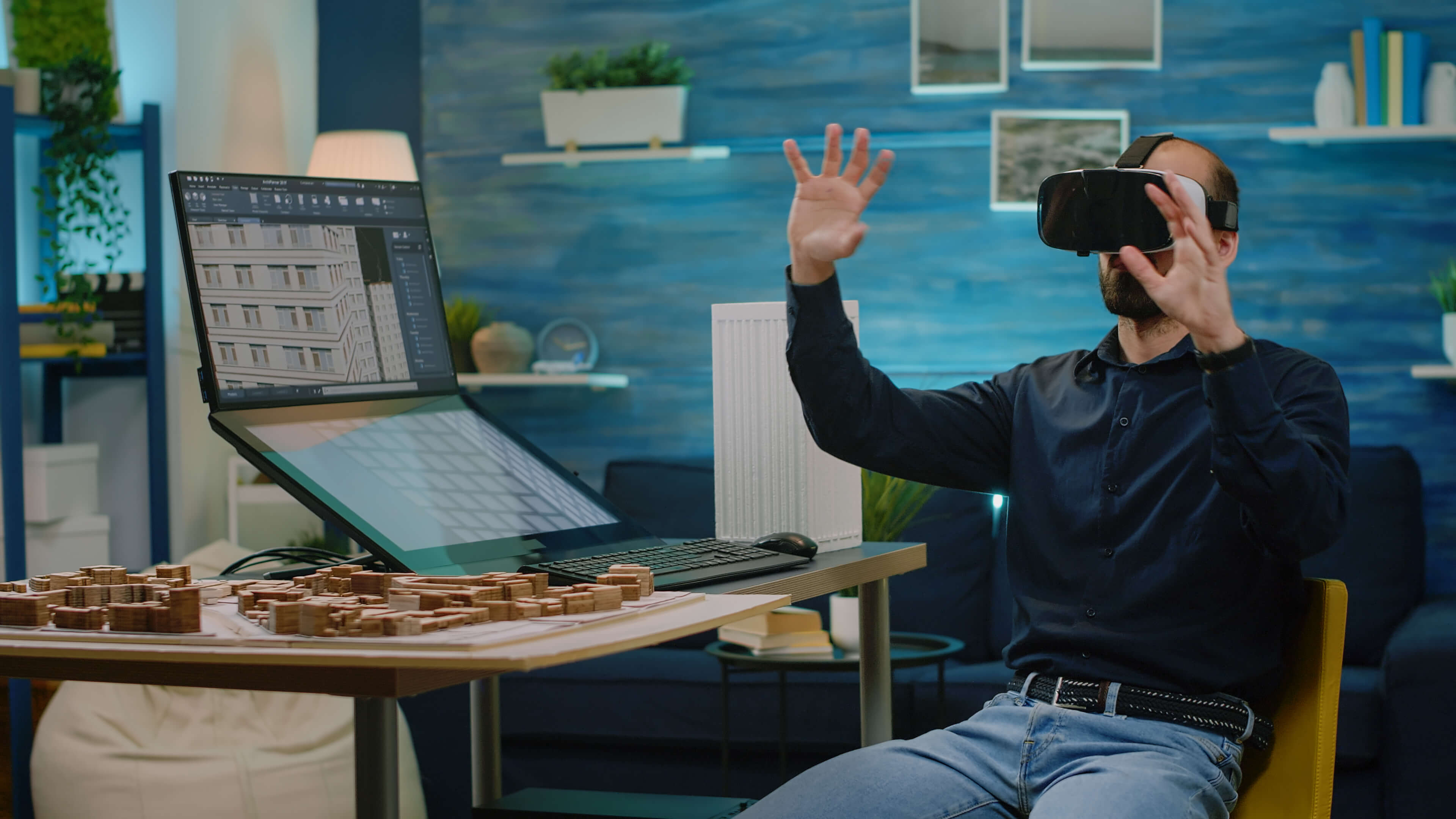
Architecture is often about translating vision into built reality—but that translation has traditionally been messy. Clients imagine, architects render, models are built—and misalignments, miscommunications, and surprises are inevitable.
Virtual Reality (VR), however, is quietly becoming a new translator. It lets stakeholders step inside designs before they exist, make better decisions earlier, and reduce risk when it matters most.
Read real stories, practical benefits, and a roadmap you can use in your next project:
Real Stories: When VR Made a Difference
Gensler + NVIDIA HQ
When designing NVIDIA’s Santa Clara headquarters, Gensler used IRay + VR to simulate material behavior, light, and scale. This let clients “feel” different design options in full scale and speed up decision-making.
Gensler on routine projects
Gensler design teams have used VR (360°/headset) for years, especially in interiors, public realm, and even fit-outs. Clients often comment that the sense of scale—which is notoriously hard to judge on screens—becomes unmistakable in VR.
One recent airport waiting-area project used VR to compare structural options. One version felt cramped under a concept with deep trusses; another without trusses felt spacious. Clients could instantly sense what felt right.

Mortenson (AEC / Healthcare)
Mortenson’s Virtual Insights team applies interactive VR in healthcare projects so doctors and staff can walk through rooms, test ergonomics, and flag issues before construction begins. It trims costs on mockups and catches design flaws early.
In one data center project, VR reviews surfaced over 600 comments from stakeholders—and about 10% of those were high-impact issues that would otherwise slip into construction.
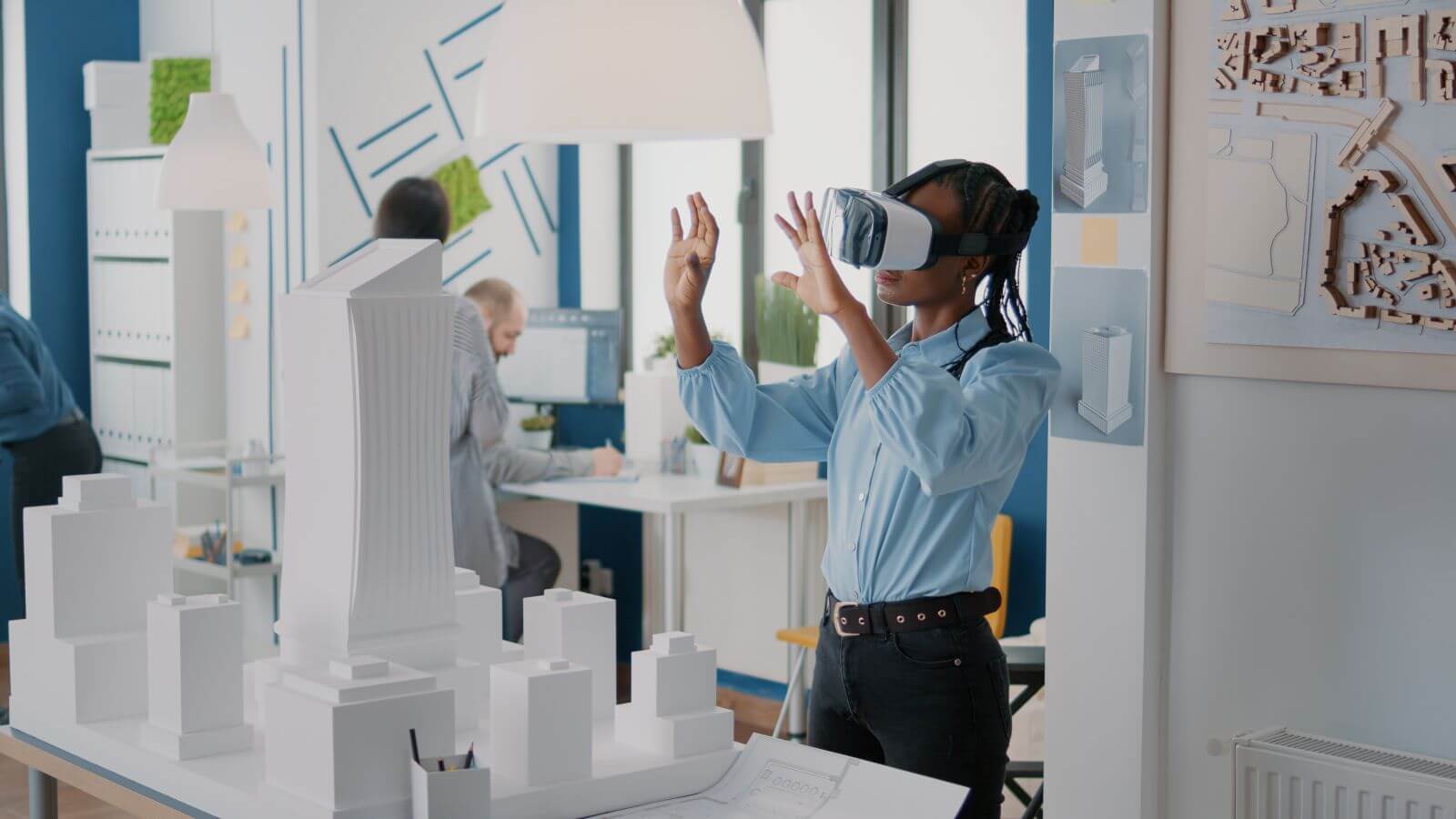
The Key Benefits of VR in Architecture (Why It Matters)
- See spaces at true scale – Catch clearance issues, sightlines, and proportions early.
- Align stakeholders faster – Get clients, consultants, and contractors on the same page, in the same virtual model.
- Reduce physical mockups – Replace expensive, temporary builds with virtual ones.
- Detect issues early – Spot MEP clashes, ergonomics, and layout problems before they hit construction.
- Sell the vision with impact – Help investors and decision-makers experience the design, not just imagine it.
- Design for everyone – Simulate accessibility challenges to create safer, more inclusive spaces.
A Simple Blueprint: Pilot VR in Your Next Project
- Pick a high-impact space as test area
Choose a lobby, corridor, OR, or showroom — somewhere clarity and flow are critical. - Prepare your BIM / CAD model
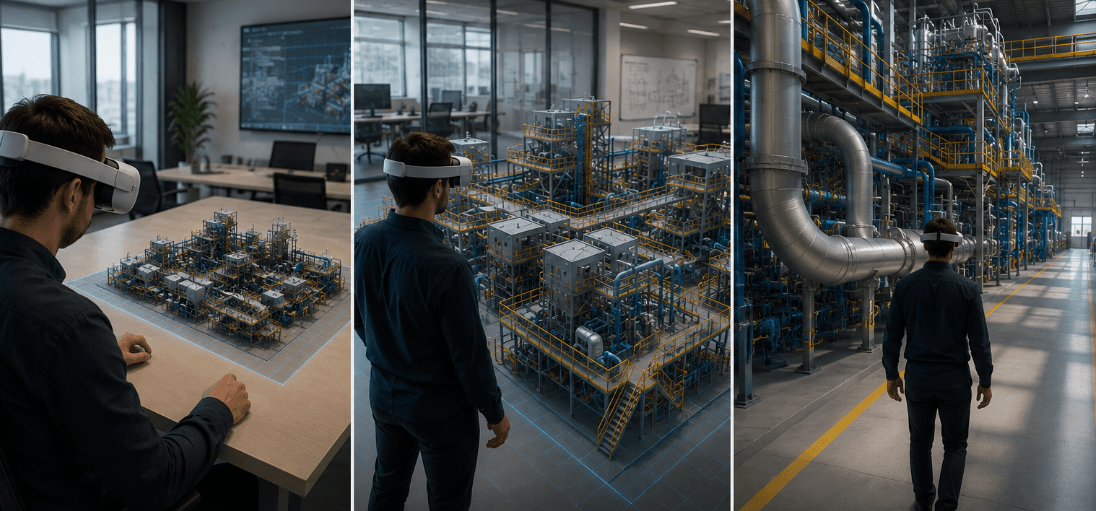
With many workflows you’d need to export or convert geometry — but with the VR bridge moreViz you can show the live model directly in VR with no conversion step at all. - Run internal walkthroughs
Have your team explore the model in VR, mark issues like clearances, form, ergonomics, and document comments. - Pilot a client session
Let clients experience options, compare alternatives, and make decisions in real time. - Track results
Count issues caught early, decisions made faster, and mockups avoided. Compare to your usual workflow. - Standardize
Write a short internal playbook for model prep, session roles, and decision tracking. - Scale up
Expand VR reviews to more project types and phases — renovations, fit-outs, and concept design.
Things to Watch Out For (and Mitigate) when using VR in Architecture
- Overfidelity trap – Don’t waste time polishing every material before validating spatial logic. Start with quick, low-fidelity VR, then refine.
- Client hesitation – Offer a parallel screen view for those who aren’t ready to wear a headset.
- Hardware – With moreViz, you can mix HMDs, Powerwalls, and CAVEs in the same session — even if participants join remotely.
- Data overload – Keep geometry optimized so VR sessions run smoothly.
- Lost feedback – Use structured note-taking. In moreViz, participants can add pins and comments directly inside the VR menu so nothing gets lost.
Final Thoughts
VR is no longer a gadget for a few visionary firms. It’s becoming a core tool in how buildings are conceived, reviewed, and realized. The firms leading VR usage are not just showing renders—they’re letting people experience architecture before it’s built.
When used wisely, VR helps you reduce risk, save costs, align clients faster, and detect issues earlier. For any architect or firm asking “Should we try VR?”, the better question might be which project you’ll pilot it on first.