When you build trains that carry millions of passengers, clarity is everything. A single misunderstanding between engineering, suppliers, and clients can cost hundreds of thousands of euros or months of delay.
At one of Europe’s leading rolling-stock manufacturers, those risks were once part of daily reality. Physical mock-ups for lighting or layout validation consumed enormous resources.
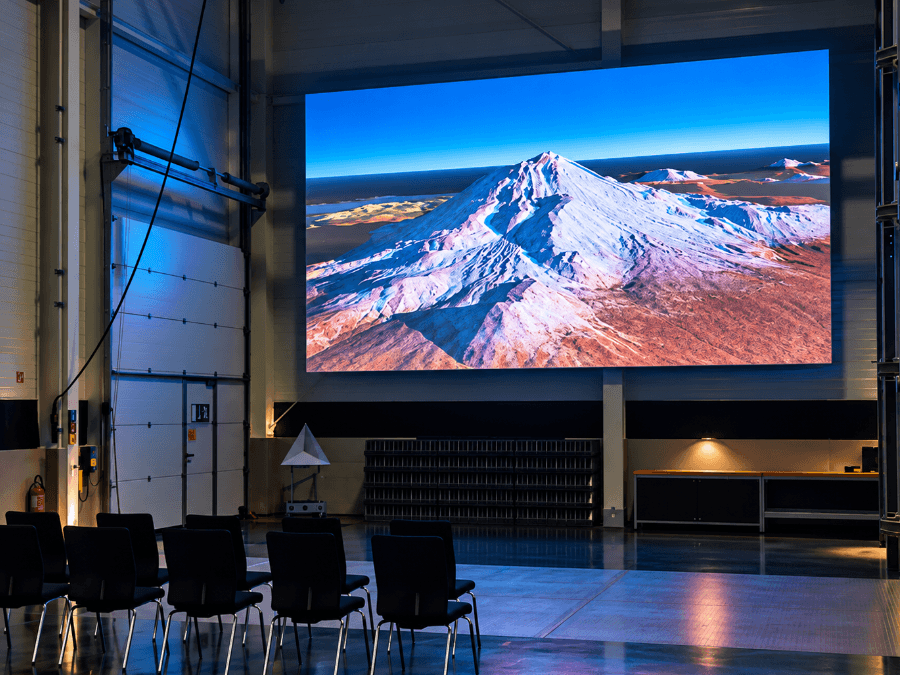
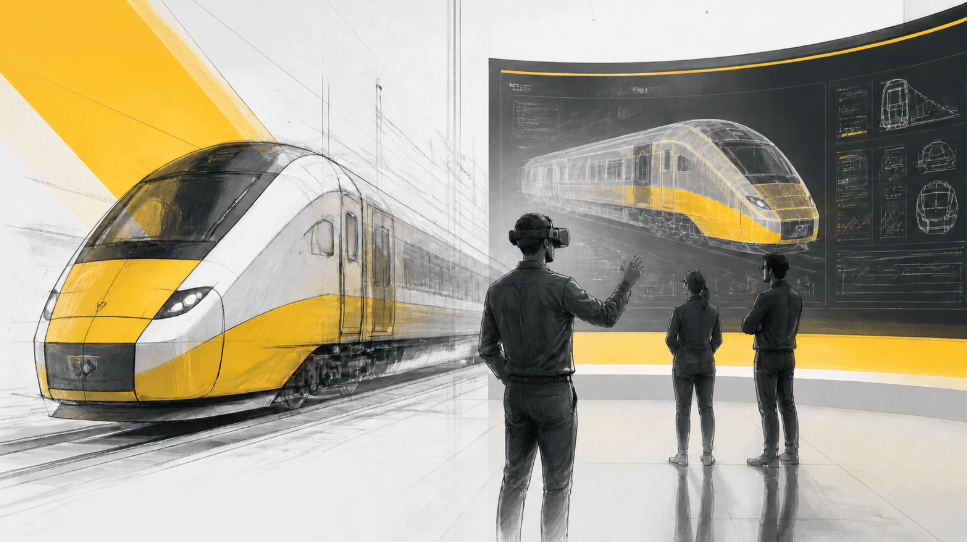
A VR Powerwall at the company’s German engineering site has changed that. It turns complex CAD data into a shared visual space where teams, suppliers, and customers stand together in front of the same model. Combined with the moreViz software from more3D, the system is flexible and easy to use across different applications.
“VR is a communication tool. It brings clarity, transparency, and faster understanding for everyone involved.” — Company’s lead for visualization technologies
By putting visualization at the center of its workflow, the manufacturer has cut development time for new rolling-stock projects from as long as eight years to just twenty-two months.
So how did the team and more3D turn VR into a practical everyday tool?
From Digital Vision to Shared Reality
The company designs and builds everything from high-speed and regional trains to metros, signaling, and digital infrastructure. Its strength lies in end-to-end continuity: one digital thread connecting concept, engineering, and operation.
That continuity naturally led to 3D visualization. “We started with 3D stereo in 2003,” the visualization lead recalls. “At that time, hardly anyone used VR in engineering.”
Two decades later, the Powerwall is still a hub where up to twenty participants — engineers, buyers, suppliers, and customers — review large digital mock-ups at true-to-life size. They can inspect details, test manufacturability, or discuss accessibility directly around the same model.
Everyone sees the same thing. Everyone speaks the same visual language.
“Many stakeholders can’t imagine spatial structures from 2D drawings. In VR they understand immediately.” — Company’s lead for visualization technologies
Instead of relying on lengthy slide decks, teams meet at the Powerwall, where complex questions are answered quickly. Issues that once needed several meetings or long feedback cycles are now resolved in a single session.
This clarity also extends to customers. In a major regional rail project for a national railway operator, the manufacturer supplied VR data that the customer later reused to present the new trains to its own stakeholders. The data covered interior layouts, accessibility, and even simulated noise levels for the surrounding environment.
Immersive visualization doesn’t just improve engineering; it creates alignment across the entire value chain.
Why the Team Chose more3D and moreViz
In April 2025, the manufacturer began working with more3D, the Bonn-based specialist for real-time VR bridging software. The goal was to make it effortless to bring massive CAD and PLM models into VR, without conversion, manual prep, or rebuilding scenes for every program.
“We wanted something simple and reliable. With moreViz we can open models from Teamcenter, PTC Creo, or Autodesk VRED instantly with no extra work.” — Company’s lead for visualization technologies
That simplicity was the deciding factor. moreViz fits into existing workflows, removes redundant exports, and keeps visualization fluid even for huge assemblies.
Based on the team’s feedback, more3D further enhanced the software, for example by adding haptic feedback: controllers vibrate when they touch geometry, which helps when testing accessibility or demonstrating physical clearances to customers.
As part of its customer care, more3D also provided training on creating 3D videos for internal communication and events, which were enthusiastically received at company gatherings.
“The more3D team is friendly, responsive, and solution-oriented. They adapted the software exactly to our needs, making the experience even more realistic.” — Company’s lead for visualization technologies
Virtual Mock-Ups Save Hundreds of Thousands
Lighting verification shows the impact clearly. Train interiors must comply with strict brightness and reflection standards. A physical light-testing setup can cost hundreds of thousands, sometimes millions, of euros and take weeks to assemble. Now the process is digital.
“We can test a dozen lighting variants in minutes. The software lets us press a button and instantly compare results.” — Company’s lead for visualization technologies
The team simulates light, shadow, and reflection directly on the Powerwall, with no expensive mock-ups required. Engineers adjust parameters on the fly and still meet compliance values.
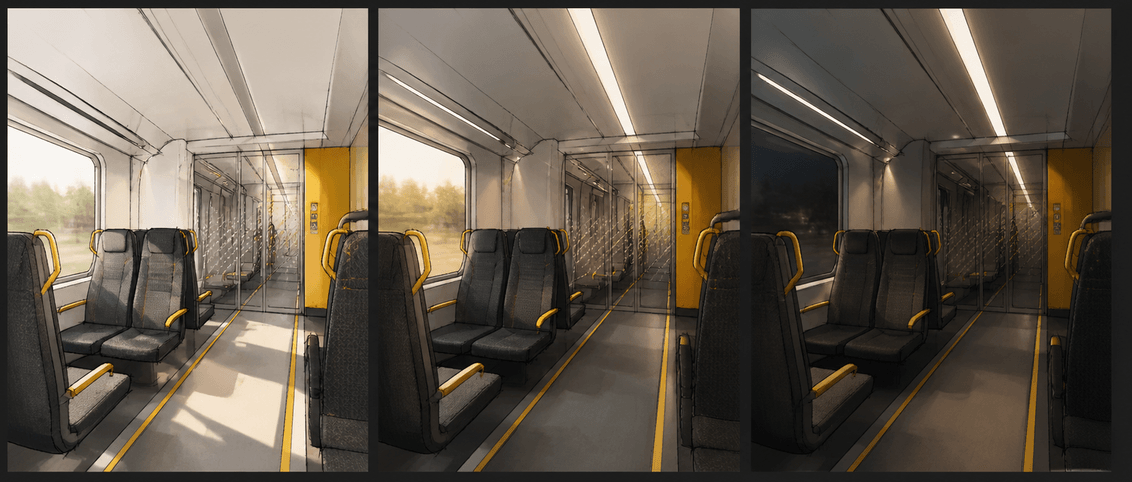
Fast variant testing means quicker approvals, smaller budgets, and shorter projects. It’s one reason development cycles have dropped from years to months.
Powerwall and Headsets — Different Tools for Different Goals
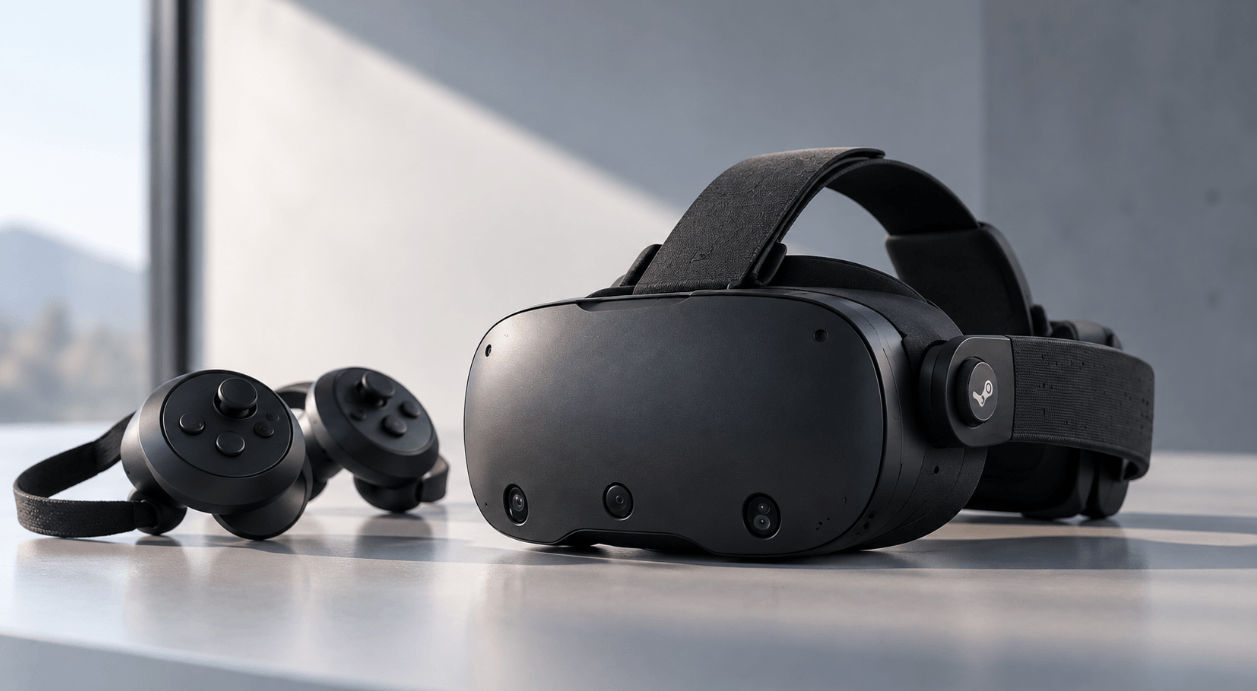
The manufacturer uses both VR head-mounted displays (HMDs) and the Powerwall, depending on the situation.
HMDs suit focused reviews with one or two people, such as engineers discussing a specific design area or service specialists visiting a customer site. “Our staff sometimes take a headset directly to the customer,” the visualization lead says. “They can point out issues or discuss details on the spot — it’s very effective for quick, targeted decisions.”
But for teamwork, the Powerwall wins. “Not everyone can wear a headset. Some feel uncomfortable, others worry about hygiene, and in some cultures it’s simply not common. On the Powerwall, twenty people can discuss together and see the same thing in a convenient setting.”
The group format lets everyone — decision-makers, engineers, and support staff — view and comment at the same time. Someone points to an issue, others respond instantly, and solutions emerge right there.
Headsets isolate; the Powerwall connects. It’s ideal for management reviews, supplier workshops, and international visitors unfamiliar with VR hardware.
Beyond meetings, VR is also a star attraction at trade fairs. Visitors gather around life-size digital trains on the company’s booths. The immersive experience shows new technologies and sustainability concepts in a way flat screens can’t.
“It creates excitement and trust. Customers immediately see that what we show is technically real.” — Company’s lead for visualization technologies
That honesty has become part of the company’s brand: transparent, realistic, and grounded in engineering.
Beyond Delivery — Continuing the Value of 3D
For the manufacturer and its customers, VR data lives on long after a project ends. Clients can reuse the 3D models for maintenance planning, staff training, or even designing depots and workshop layouts.
By working with the same digital models, they keep a consistent, accurate representation of the real product, supporting the full lifecycle of the train.
That continuity reflects the company’s philosophy: a clear, traceable digital process from first design to daily operation.
A Broader Movement
The Powerwall is part of a wider VR shift across the company’s global operations. At production sites, VR-based safety simulations prepare employees for real-life hazards. In major metro projects, high-fidelity mock-ups combined with VR walkthroughs let passengers and officials experience new trains before construction begins. At exhibitions, immersive demos built with moreViz present sustainable rail innovation to visitors.
Everywhere, the goal is the same: make complex systems tangible and enable better collaboration between all stakeholders.
What Matters When Adopting VR
The visualization lead’s advice to new adopters comes from experience: “First think clearly about what you want to achieve — product presentation, design review, digital mock-up, or communication.”
VR can quickly become expensive. A Powerwall, headsets, and high-end workstations can cost €100,000 or more, so usability is crucial. “If VR needs a 24/7 team to manage, it becomes too costly and won’t be used. It must be easy for anyone to learn and operate.”
Performance matter just as much. Large models must load smoothly and look realistic. AI might simplify optimization in the future, but for now lean, user-friendly workflows matter most.
Realism itself is non-negotiable. “When you present something in VR, it must be technically achievable,” the visualization lead warns. “If a model looks great but can’t be built, customers will still expect it exactly like that.”
That’s why the team takes time to create accurate, physically realistic models that match production reality.
“In VR everything looks possible, but only real, feasible models build trust. Our process shows clearly what the customer will actually get.” — Company’s lead for visualization technologies
This commitment to authenticity keeps the company’s visualizations credible and its partnerships strong.
Looking Ahead
The manufacturer may extend its immersive setup in future, perhaps one day into a multi-sided CAVE, but its priorities stay pragmatic: simplicity, performance, and real-world benefit.
“The closer we bring everyone around one shared view, the faster and better our decisions become.” — Company’s lead for visualization technologies
For this team, VR is no longer a novelty. It’s a strategic communication platform that saves money, reduces risk, and builds confidence. By letting engineers, suppliers, and customers share the same visual truth, the company shows that clarity is the fastest route to innovation.
Experience moreViz in Action
Discover how moreViz connects real-time VR to your existing CAD, simulation, and visualization tools, from Powerwalls to HMDs.
Start a 14-day free trial or book a live demo at www.more3d.com