A new 2026 study of 775 university faculty members looked at an interesting question: Where are the main difficulties in integrating VR, AR and XR into higher education?
And, as we would expect, it is not so much the technology itself that is the problem. The researchers identified five main groups of barriers: technical, pedagogical, economic, resistance to change, and ethical/social issues, with economic and pedagogical concerns having the strongest impact.
The researchers therefore conclude that successful adoption needs more than hardware. They specifically call for pedagogically focused training, long-term financial planning including maintenance and updates, and a stronger institutional culture around innovation.
That fits well with what we have experienced when working with universities over the years. But let’s take a deeper look at the challenges universities face when introducing VR — and what can help overcome them.
1. Economic barriers: the purchase price is only part of the story
Universities often face budget restrictions or depend on public grants for projects of this kind. And we are not only talking about the equipment itself, but also maintenance, upgrades and operational costs. Once the initial project budget is gone, who is going to pay for these?
A university may successfully secure funding for the initial installation but still struggle later because there is no budget for the people needed to operate and support it.
Some real case studies give some insight about the cost.
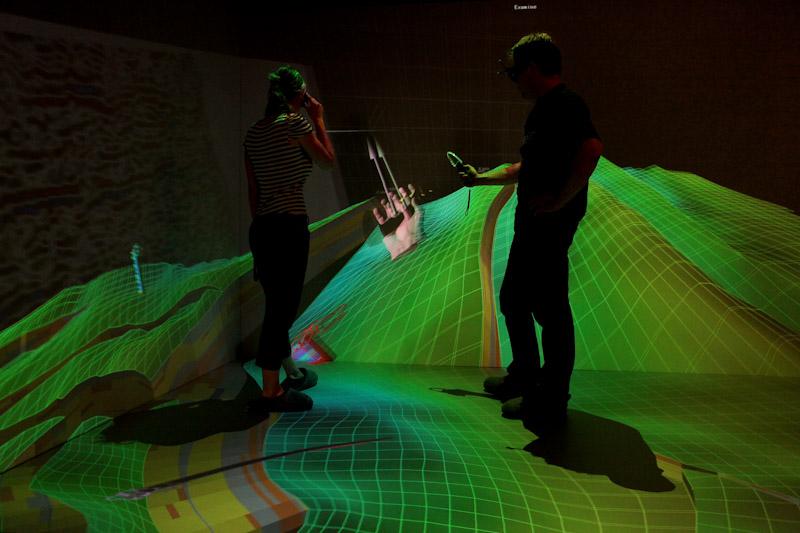
The Universität Potsdam‘s geosciences CAVE required an initial investment of around €600,000. The project also involved structural work such as cooling and soundproofing. Once installed, however, annual maintenance remained relatively modest at around €2,000–€3,000, mainly for projector lamps and occasional hardware upgrades.
At Hochschule Zittau/Görlitz, a newer CAVE project cost approximately €500,000. The CAVE itself was assembled quickly, but room preparation and external dependencies such as climate control stretched the overall timeline by several months.
What helps
Budget the system as infrastructure, not as a one-time purchase. It also helps to think outside the box: The broader the use of the system, the easier the investment becomes to justify.
Cooperation with industry or public-sector organisations can also make sense. Under the right circumstances, external partners may benefit from the VR setup as well and contribute to projects, research or funding.
The University of Potsdam, for example, uses its CAVE not only for teaching, but also for field planning, seismic studies, crisis simulation and communication of research results.
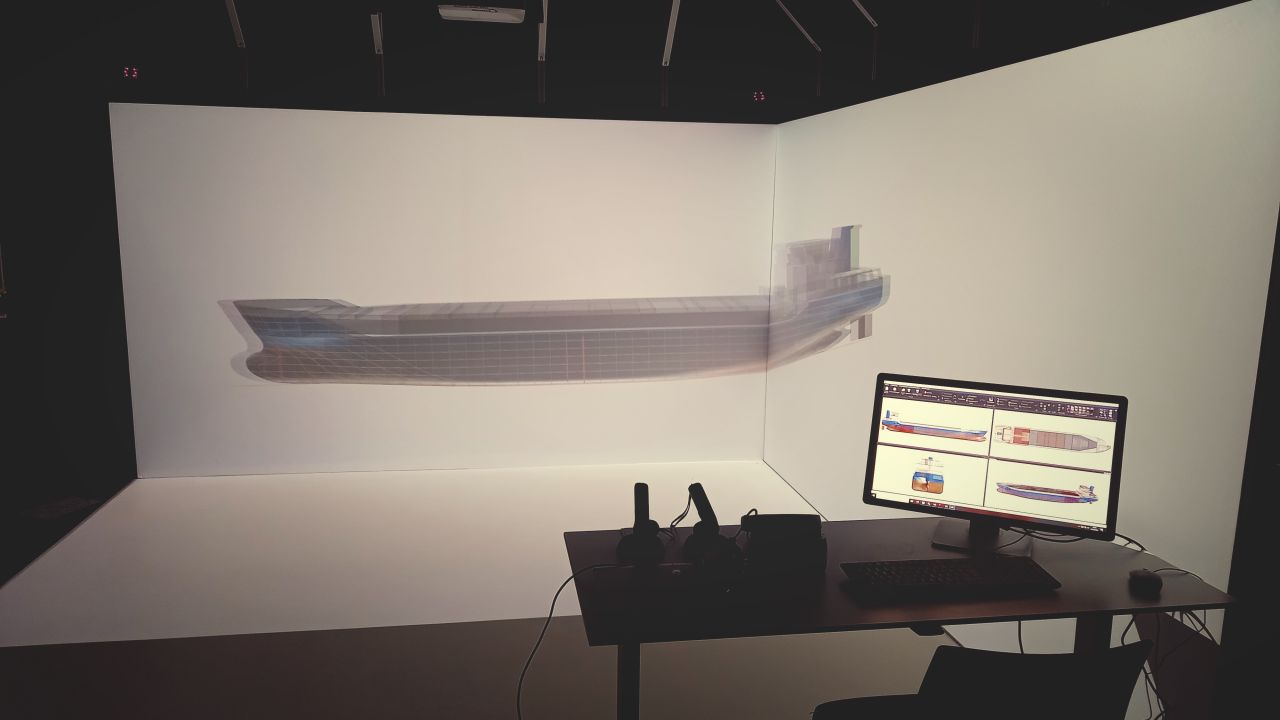
At Hochschule Emden/Leer, the CAVE has been used for almost a decade across teaching, research and industry projects, including maritime education, the EU-funded GreenSailer project and Mittelstand 4.0 activities with companies.
In addition, an experienced project partner like more3D can help develop a sustainable concept for the VR setup, including realistic hardware, software and financing options within the available budget.
2. Pedagogical barriers: VR needs a reason to be there
While budget questions can often be solved over time or approached in different ways, another issue can become a real showstopper: According to the study mentioned above, two significant barriers were insufficient faculty training and a lack of clear educational models.
A professor may have access to a VR lab and still have no useful answer to a very basic question: What should I do differently in my course just because this system exists?
What helps
That question cannot be answered by the technology supplier alone. Universities can, however, learn a great deal from each other by exchanging experiences and looking at practical use cases that already work.
At UAS Emden/Leer, students can walk through full-scale ship models and inspect maritime designs in three dimensions. The lab is also used for evacuation planning, offshore wind logistics and process simulation.
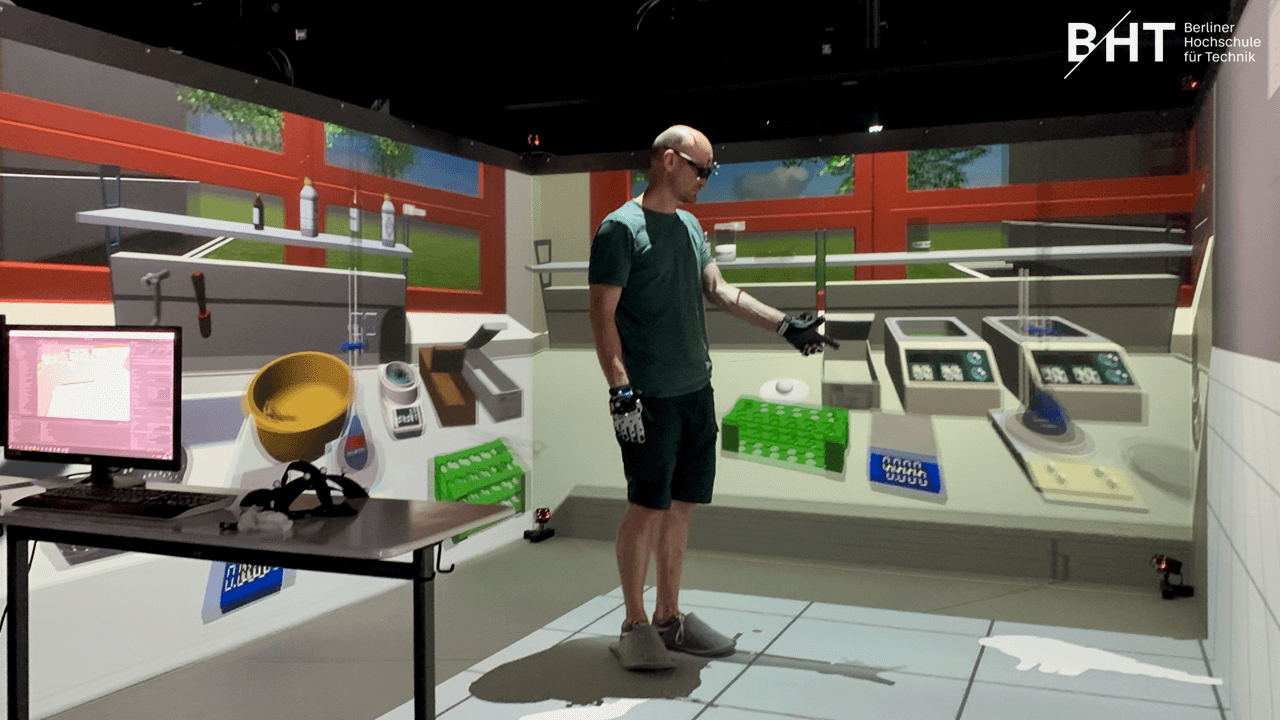
At Berliner Hochschule für Technik (BHT)‘s CAVE, the examples become even more varied.
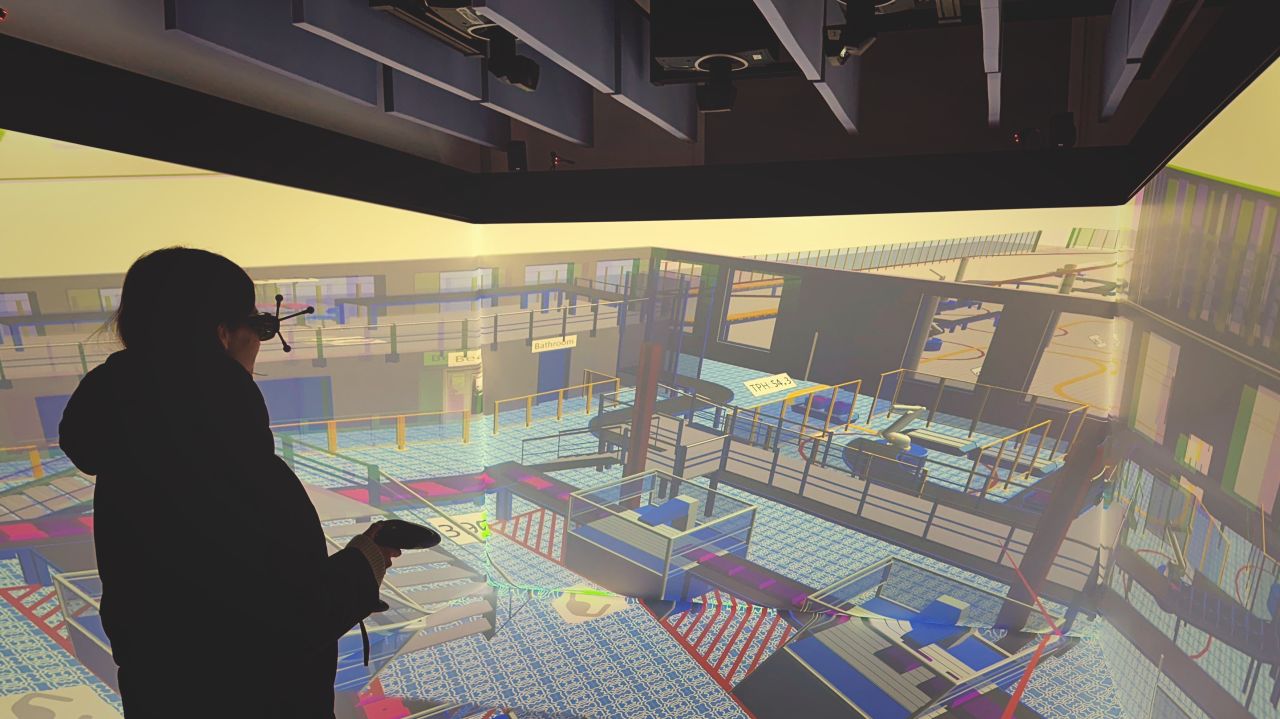
Mechanical engineering students can inspect CAD models. A virtual barrier-free factory is used to examine accessibility, ergonomics and layout. Biotechnology students can step through a mozzarella production process that would otherwise be too lengthy or impractical to run during a normal class.
An interdisciplinary workshop can also help identify where students repeatedly struggle because a subject is difficult to understand on a flat screen, expensive to reproduce physically or impossible to access directly.
A VR bridge such as moreViz can also reduce the need to produce large amounts of additional VR content, which is often expensive and time-consuming. moreViz can connect OpenGL-based applications directly to a VR environment, creating a live link to the existing 3D view so that users can explore and work with the data in VR.
Further developments in AI may also make the creation of dedicated VR content faster and more affordable over time.
It is also worth keeping expectations realistic. BHT describes its CAVE as a useful complement to conventional teaching, not as something that replaces laboratories or workshops. It provides another way to inspect, simulate and experiment where physical methods are difficult, costly or time-consuming.
3. Technical barriers: every extra step makes adoption harder
The technical barrier is not simply whether the hardware works. For lecturers and researchers, the more practical issue is: How much extra work does using VR create?
This is where many technically successful systems become difficult to use regularly. If too much preparation is required before a VR session can begin, VR quickly becomes something reserved for special demonstrations — and remains unused for much of the time.
One quote from GEOMAR Helmholtz-Zentrum für Ozeanforschung Kiel summarises the issue well:
“Scientists are often reluctant to adopt new tools — not because they fear change, but because switching can be costly.”
That is a better explanation of technical resistance than simply saying people do not like new technology.
What helps
Knowing about these challenges, the University of Potsdam specifically wanted to avoid long preparation times. Because preparing data for VR could otherwise take days, their goal was to bring the data into the system and get started within minutes. The CAVE therefore had to support a wide range of existing applications and be simple enough for students and researchers to operate.
This is one reason moreViz became part of the system. Potsdam uses it with applications including ArcGIS, Petrel, MOVE and LIME while maintaining direct interaction with the data.
At Potsdam, even users who do not consider themselves “digital natives” can reportedly operate the system within 30 minutes of training. Others have reported even shorter times to become comfortable navigating and working in VR.
A similar issue came up at Hochschule Zittau/Görlitz. The university wanted to use existing Festo automation tools in the CAVE, but there was initially no suitable interface. Rather than changing the whole workflow, more3D adapted moreViz to support the required data. The university now uses the system with Siemens NX, Plant Simulation, Solid Edge, JT2Go, SAP Visual Enterprise and Festo applications.
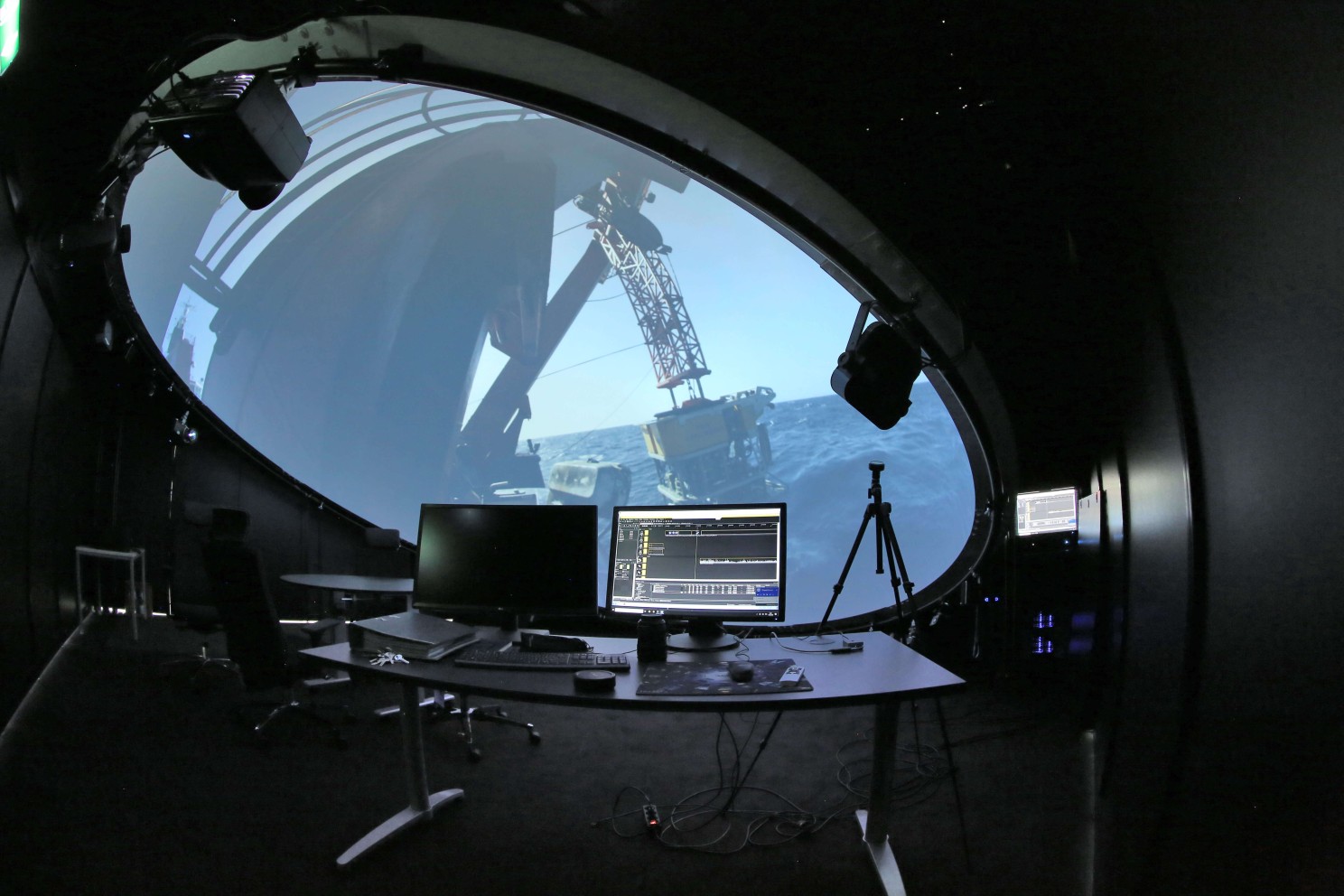
GEOMAR faced the same problem from a research perspective. Switching tools or repeatedly converting data would add cost and complexity. Their VR dome therefore uses applications such as SolidWorks, Fledermaus, Metashape and Petrel directly through moreViz.
In short: Reduce the number of new workflows. Keep familiar applications where possible. Keep navigation simple. Avoid unnecessary conversion or export steps. That helps VR support the lesson instead of making “how to use VR” the lesson itself.
4. Resistance to change: often it is really a resource problem
Of course, resistance to change exists. But often there is a reason behind it. If a professor is already fully occupied with teaching, research and administration, additional work for a new VR setup may not be particularly attractive — especially if the value is not yet obvious.
The BHT case makes this especially visible. The university estimates that operating its CAVE requires around 10–15 hours per week for administration, maintenance and user support. New lecturers also need onboarding.
What helps
According to the lab team, having a dedicated person or team makes a major difference because many teachers first need to experience the benefit before they are willing to invest additional effort in adapting their exercises.
Therefore assign responsibility and ownership. There should be someone who can help others get started, explain the value, solve problems and keep the system running so that lecturers and researchers can focus on teaching and research.
To get there, a small pilot group usually works better than trying to convince the whole university at once. Once lecturers see a colleague using the system successfully in a real course or research project, it becomes much easier for them to imagine how it could also be useful in their own work.
5. Ethical and social barriers: not everyone should be forced into a headset
The study also identifies ethical and social barriers as a separate category. Female faculty rated these concerns significantly higher than male faculty, although there were no significant gender differences across most of the other dimensions. This category includes issues caused by VR headsets as
accessibility
privacy, tracking and user data
physical comfort
motion sickness
social interaction
cultural and religious concerns
What helps
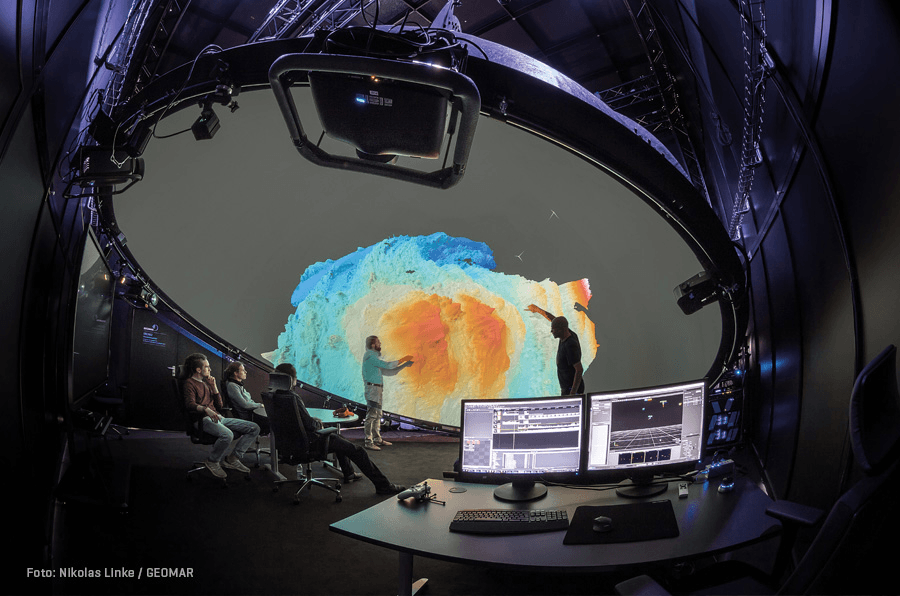
It is important to remember that VR is not only about headsets. Headsets are becoming lighter and more comfortable, but there are also other options such as Powerwalls and CAVEs that enable immersive visualization without requiring users to wear an HMD.
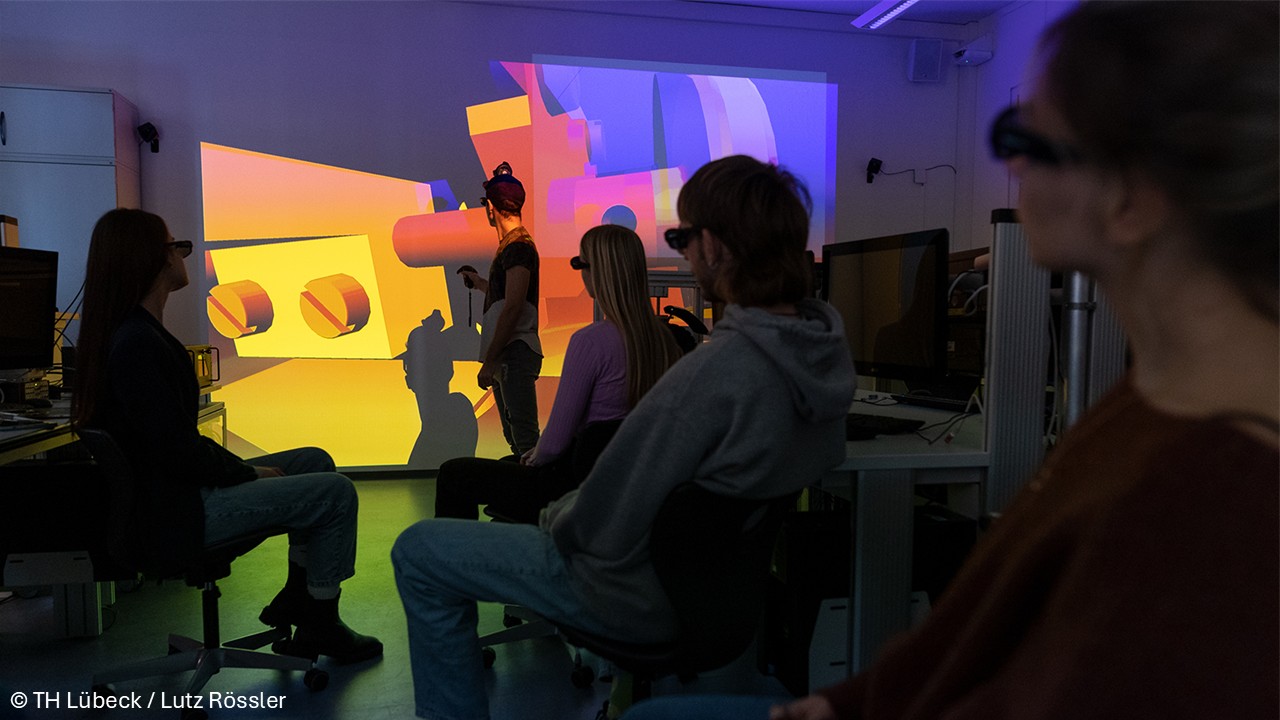
In fact, a CAVE or Powerwall can be better suited to group situations because students remain visible to each other and can discuss the same model face to face.
There are also effective ways to reduce the risk of motion sickness, for example through high and stable frame rates, accurate tracking and short breaks. (Read here more, why VR motion sickness happens and how to prevent it.)
When it comes to data privacy, it is useful to know that moreViz is not a cloud solution. It can be operated locally and offline, so sensitive data does not need to leave the university network or campus.
Start smaller than your final ambition
If you are considering introducing VR at your university, you will probably encounter several of these challenges:
Economic: Purchase cost, room preparation, maintenance, staffing and upgrade
Pedagogical: Finding teaching scenarios where spatial immersion really helps
Technical: Integrating existing CAD, simulation and research software without adding too much preparation
Resistance to change: Lecturers need support, time and a clear benefit before adapting courses
Ethical/social: Accessibility, comfort, collaboration and alternatives to HMD-only teaching
The good news is that these challenges can be overcome, as successful university projects already show. Hochschule Zittau/Görlitz offers one practical recommendation:
You can start with HMDs, gain experience and understand where VR creates value before scaling to a full CAVE.
That approach has several advantages. It gives the university time to find out:
which departments actually use VR
which software needs to be supported
what kind of room is required
whether collaboration matters
who will take responsibility
which use cases survive beyond the pilot phase
Only then does it make sense to decide whether the institution needs a larger projection environment. The strongest examples are not necessarily the setups with the most impressive specifications. They are the ones where the system fits naturally into teaching, research and existing software workflows. Or, as the University of Potsdam puts it:
“Keep the tech out of the user’s way. Let them focus on the data.”
For universities considering VR today, that may be the most practical starting point of all.